
About
Built by someone who kept forgetting.
Mnevra is a personal memory companion: an app that quietly keeps track of your life, and hands it back when you need it.
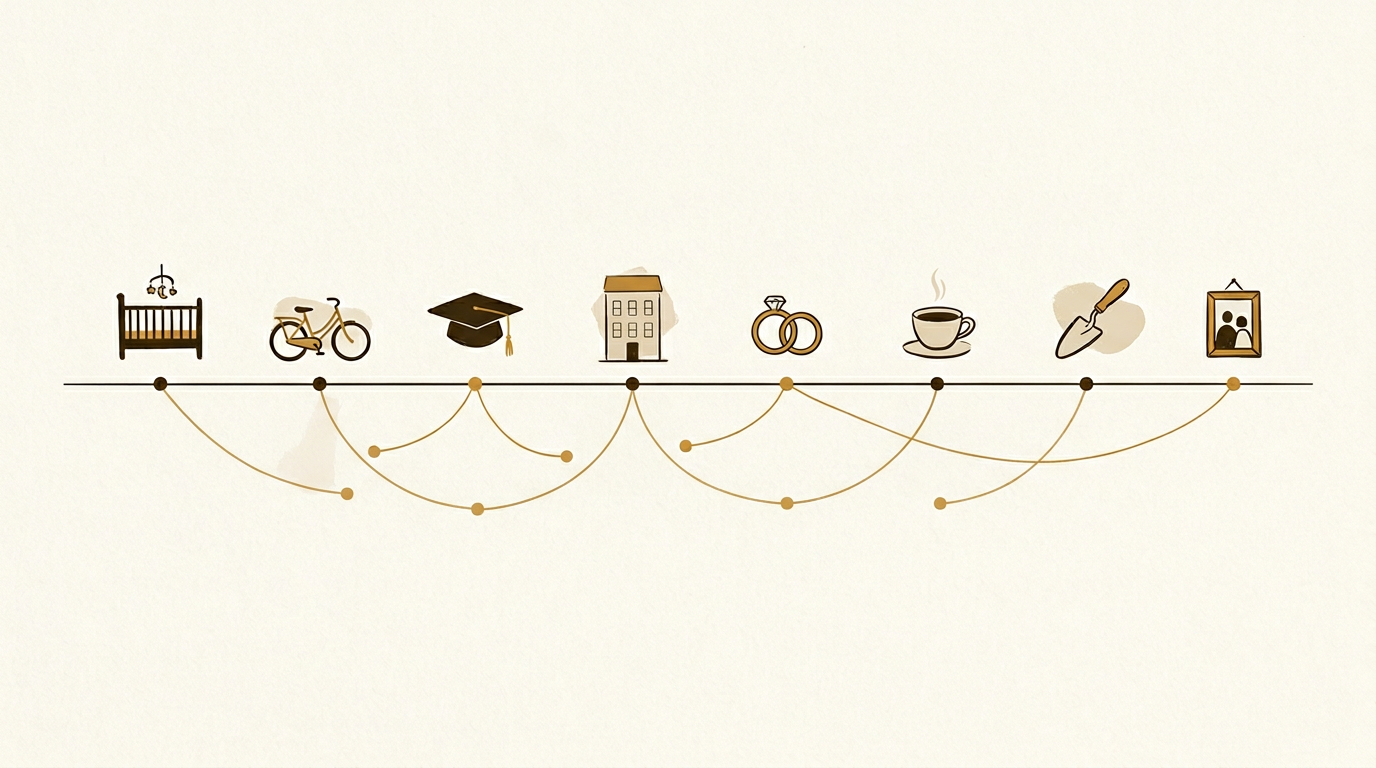
Why we built it
Memory is quietly failing all of us.
We forget the names of people we've just met. The thread of a story we promised ourselves we'd write down. The year our kid lost a tooth. The café in Lisbon. The name of the doctor who was actually good.
The tools that exist (notes apps, journals, CRMs) all ask us to be more organised than we actually are. They assume we'll come back to file things. We don't. So our lives stay scattered across thousands of fragments that no human could hold in one head, and no piece of software currently tries to.
Mnevra is a different answer. You just talk. It listens, notices the people and places and moments, puts them where they belong, and hands them back when you need them. The job of remembering stops being yours.
Your life, remembered. Every person, moment and detail, connected and always at hand.

Built by
I built it for myself, first.
Mnevra started as a selfish project. Three daughters, a company, a health thing I'd rather not dwell on, and the slow realisation that I was outsourcing huge chunks of my own life to Slack threads and half-written notes I'd never look at again. The people I'd meant to call. The conversations I'd meant to follow up on. The small details that turn strangers into friends.
I tried the usual answers (a better notes app, a CRM I'd bully myself into filling in, a journal I'd keep for a week) and each one quietly joined the pile. The problem wasn't that I needed more discipline. It was that remembering my own life shouldn't feel like a second job.
So I built the thing I actually wanted: something I could just talk to, that would notice the people and places and moments, and hand them back later without me having to file anything.
My own graph, after ~27 weeks of using it
- Memories
- 627
- People tracked
- 150
- Places
- 130
- Connections
- 693
Across four Spaces (personal, health, work and project), plus 278 conversations and a handful of goals and reminders I'd otherwise have let slip.
Mnevra is built at Molehill, a small New Zealand studio that tries to make the difficult things (starting a company, keeping a life together) feel a little less like mountains.
Who it's for
Three kinds of people find us.
The busy adult
The memoir writer
The memory-keeper
FAQ
Questions we hear a lot.
Is Mnevra a journal?
What happens to my data?
Which AI does it use?
What platforms do you support?
How much will it cost?
What happens if you shut down?
Is it safe for sensitive topics?
The name
Why Mnevra.
Mnevra (Menrva, to the Etruscans) was the goddess of wisdom, memory and the crafts, the keeper of what's worth remembering. She's the same figure the Romans later renamed Minerva, but we liked the older version.
It felt like the right name for a thing whose only job is to help you keep hold of the details of your own life.
Start remembering.
Mnevra is arriving on iPhone and Mac soon. Be among the first to use it.
Coming Soon on the
App Store